Build Wealth the Smart Way: Insights from Aaron Robertson on the Pay or Quit Podcast
The Hidden Wealth in Redding Real Estate
Should You Convert Your Primary Home Into a Rental Property?
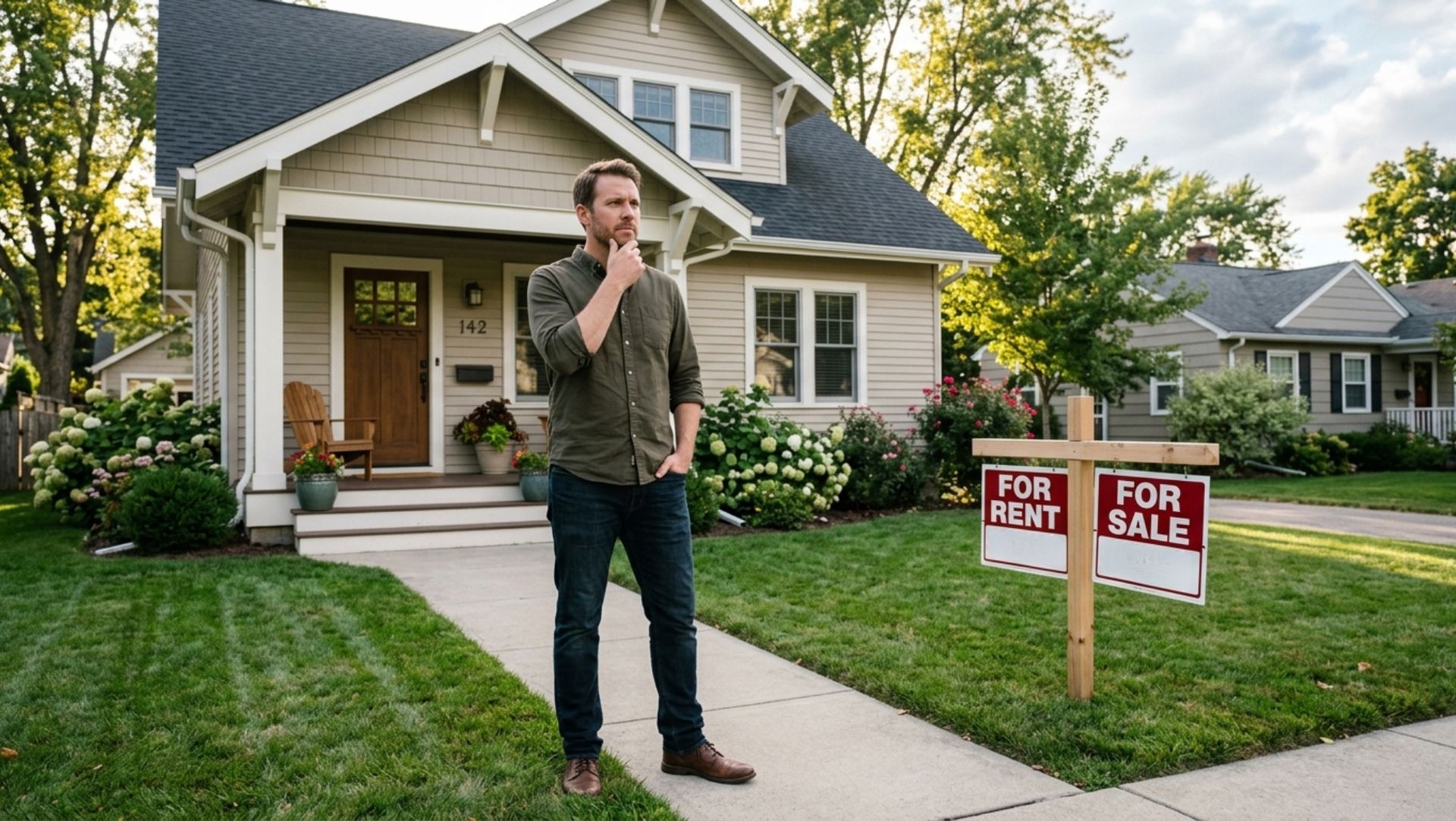
Home values have remained stubbornly high in most parts of the country even as mortgage rates have stayed elevated. Buyers are cautious, inventory is slowly rising, and sellers are no longer calling all the shots. At the same time, rental demand is strong. Remote workers are relocating, younger generations are delaying homeownership, and landlords are finding tenants faster than expected in many metros. If you own a home and are wondering what to do with it, whether you are moving for work, upgrading to a larger space, or just reassessing, now is a genuinely interesting moment to weigh your options carefully.
Selling still makes a lot of sense depending on your circumstances. Here is when cashing out is probably the smarter play.
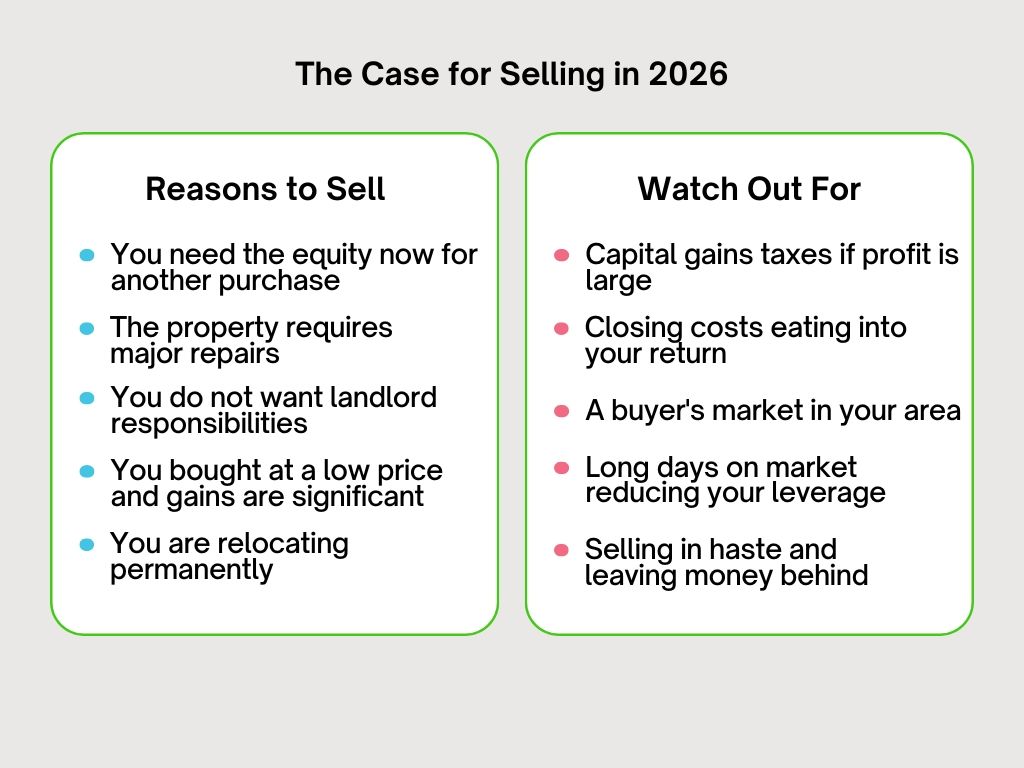
If you locked in a low interest rate years ago and now own your home outright or nearly so, selling can unlock a substantial lump sum. But do your math carefully. A 6% agent commission plus closing costs can quietly shrink a $400,000 sale by $30,000 or more before you even account for taxes.
Quick Tip: If your home has appreciated significantly since you bought it, check whether you qualify for the capital gains exclusion ($250,000 for individuals, $500,000 for couples filing jointly) before assuming you will owe big at tax time.
With rental vacancy rates low in many cities and monthly rents still high, holding onto a property as a rental can generate meaningful passive income. In 2026, a well-located property can realistically cover its mortgage, taxes, insurance, and maintenance costs while still putting a few hundred dollars a month in your pocket.
Long-term appreciation is another argument for holding. If you believe your market will continue to grow over the next decade, renting keeps you in the game without forcing you to sell at today's price. You benefit from ongoing rent income now and a higher sale price later.
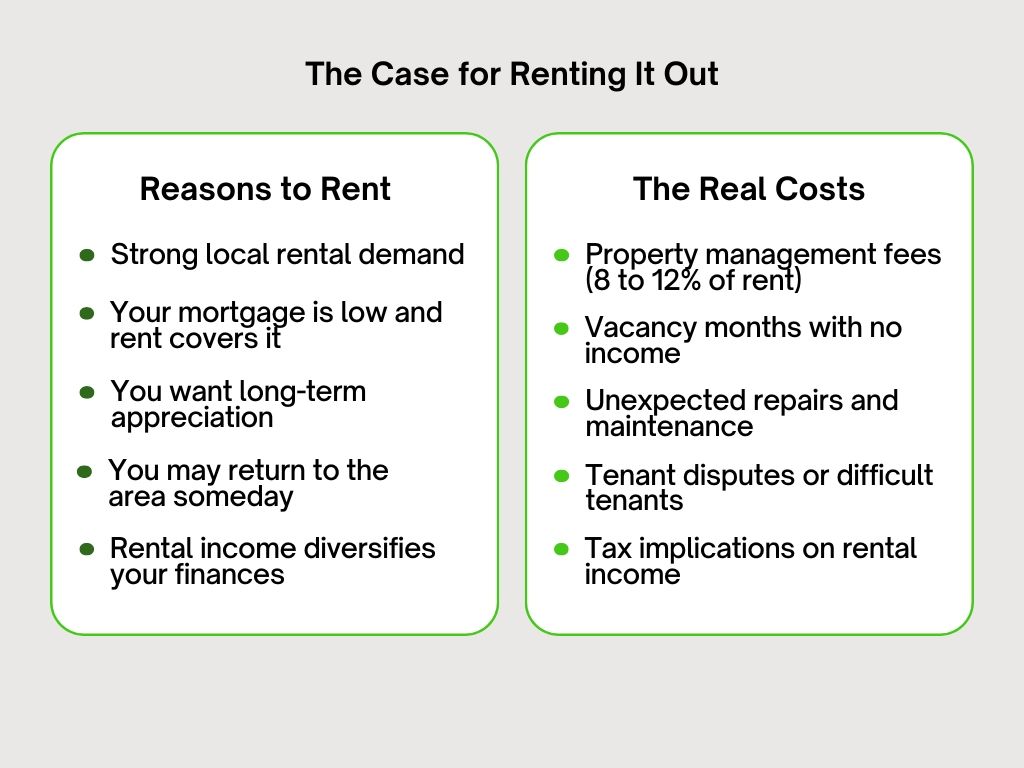
Being a landlord is not passive in the way many people imagine. Even with a property manager, you will make decisions, handle emergencies, and carry the financial risk if a tenant stops paying or a major system breaks down. Go in with realistic expectations.
One of the biggest reasons people hesitate to rent out a property is the day-to-day weight of being a landlord. That is exactly where Authority Property Management comes in. Their team handles tenant screening, maintenance coordination, rent collection, and everything in between, so you can enjoy the income without carrying the headache. If the numbers make sense for renting but the responsibility feels like too much, having a trusted property manager in your corner changes the equation entirely. You get the financial upside of holding your property, and the peace of mind that comes with knowing it is in good hands.
Before you decide anything, run two simple calculations. First, figure out your gross rental yield by dividing your expected annual rent by the home's current market value. A yield above 6% generally suggests renting is worth considering. Below 4%, and selling starts to look more attractive from a pure returns perspective. Second, calculate your net operating income by subtracting your annual costs (mortgage, taxes, insurance, maintenance, vacancy buffer, and management fees) from your expected annual rent. If the result is negative, you are paying to hold a tenant, which only makes sense if you are confident in long-term appreciation.
Example: A home worth $350,000 renting for $2,200/month earns $26,400/year. That is a 7.5% gross yield. If annual costs total $21,000, your net operating income is $5,400, or about $450/month. That is a reasonable case for renting, as long as your local market is stable.
A few trends are worth calling out this year. Mortgage rates have remained higher than the historic lows of 2020 and 2021, which means sellers are competing against a smaller pool of qualified buyers. If your home is in a price range above $500,000, expect longer timelines and more negotiation.
On the rental side, short-term rental regulations have tightened in many cities. Platforms like Airbnb and Vrbo face more restrictions in dense urban areas, which has pushed some short-term hosts toward long-term leasing instead, increasing supply in certain neighborhoods. If your plan involves short-term renting, check local rules before committing.
Interest rates also affect what you can do with your sale proceeds. If you sell and want to reinvest, consider that locking cash in a CD or high-yield savings account now earns meaningfully more than it did a few years ago. That changes the math on whether holding real estate is the best place for your equity.
🖐️Rather than chasing a universal answer, the decision really comes down to your personal situation. Ask yourself:
➡️If you answered yes to most of the first two and no to the rest, selling is likely the cleaner path. If you answered no to the first, yes to the second, and yes to the third and fifth, you may have a compelling case for renting.
In 2026, neither renting nor selling is universally better. Selling offers certainty and liquidity in a market where buyers are more selective. Renting offers ongoing income and long-term upside in a market where demand for housing remains strong. The right answer is the one that fits your financial goals, your risk tolerance, and your willingness to stay involved in the property. And if the idea of managing tenants is what has been holding you back from renting, remember that you do not have to do it alone. Authority Property Management exists so that owning a rental property can actually feel like a smart, stress-free decision. Talk to a financial advisor and a local real estate professional before you commit either way.
Share this post with a friend!
Disclaimer: The content on this blog is for informational purposes only and is not intended as legal or advice. Consult with a qualified professional for specific advice.


Anderson, Bella Vista, Cottonwood, Happy Valley, Igo, Keswick, Lake California, Millville, Mountain Gate, Oak Run, Ono, Palo Cedro, Redding, Shasta County, Old Shasta, Shasta Lake,
Authority Property Management Inc. in Redding, CA is a licensed Property Management Company and Rental Agency. We offer comprehensive real property management services in Shasta County and surrounding areas. Our expertise includes managing rental properties, single-family homes, apartments, and commercial properties.
Contact Us Today For Expert Property Management Services In Redding, CA!
2025 Authority Property Management Inc., Redding, CA. All Rights Reserved. View Our Privacy Policy