Disaster Preparedness: Wildfire Season Plans for Redding Landlords and Tenants
Why California SB 522 Could Stall Disaster Recovery and Shrink Rental Housing

Fire Prevention Week is October 4-10, and this year's theme is "Charge into Fire Safety: Safe Charging Is a Superpower," which focuses on everyday charging habits that reduce fire risk. Here in Redding, we know how quickly fire can change lives. If you own a rental in Shasta County, Anderson, Palo Cedro, or Lake California, or you rent a home in Cottonwood or Shasta Lake, fire safety is a
shared responsibility.
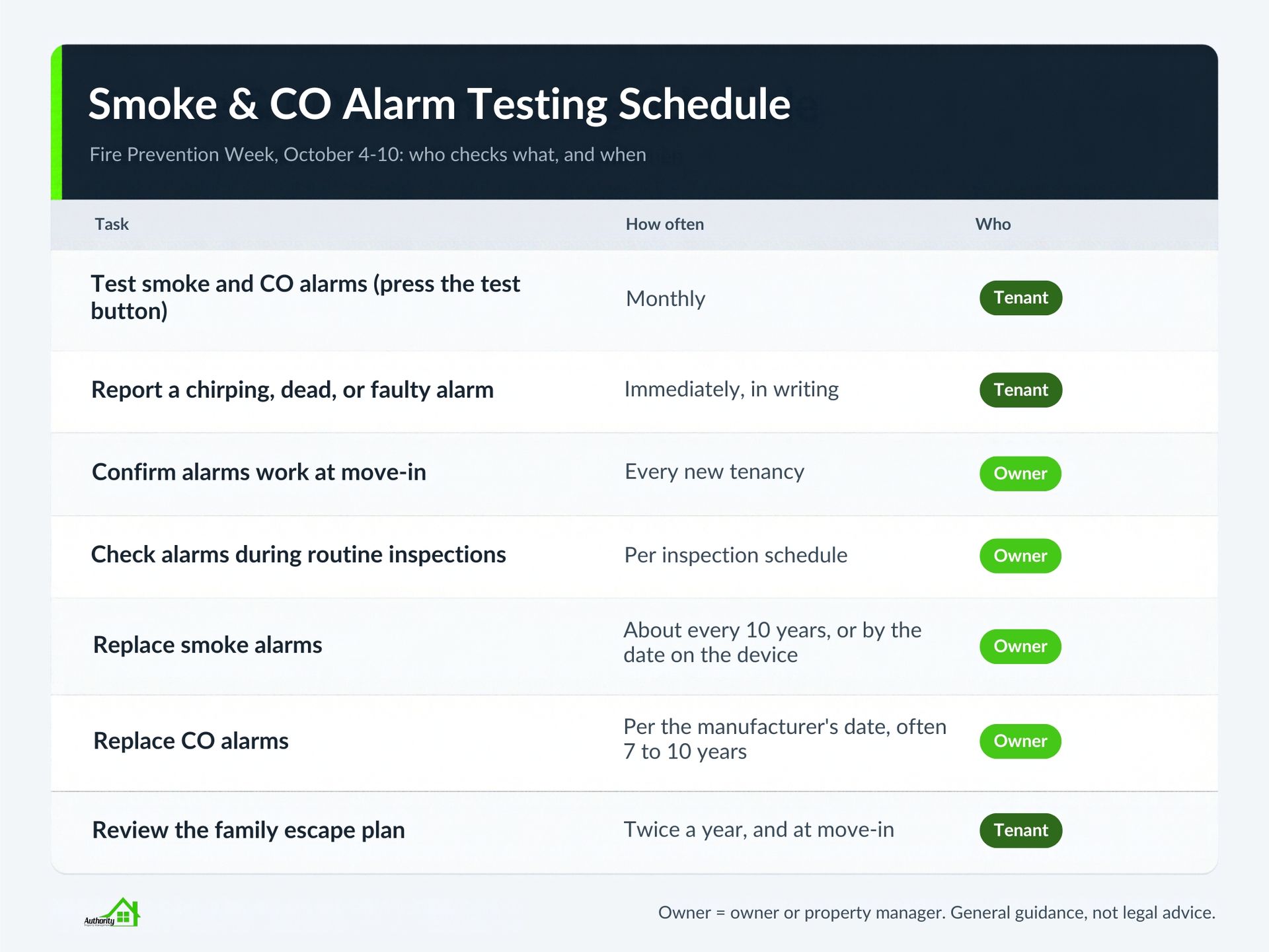
This guide covers who is responsible for what, how often to test your alarms, and how to protect yourself financially.
Working alarms are not optional in a rental. A few key points:
Owner tip: Document everything. Record the alarm locations, manufacture dates, and test results at move-in and at every inspection. If an incident ever occurs, a paper trail is your best protection.
Phones, laptops, e-bikes, scooters, and power tools all run on lithium-ion batteries. They are generally safe when used properly, but damaged batteries or improper charging can cause them to overheat and ignite.
Simple habits help:
For owners: Consider adding e-bike and scooter charging and storage guidelines to your lease. It's a growing issue, and a clear policy protects everyone.
As temperatures drop across Shasta County, heating season brings its own risks:
A property owner's insurance generally covers the building,
not a tenant's personal belongings. After a fire, a tenant without renters insurance may lose everything with no way to replace it.
A typical policy covers:
Policies are usually inexpensive for the protection they provide. For owners, requiring renters insurance in the lease reduces disputes and financial exposure after a loss.
Tenants:
Owners:
Keeping up with safety compliance, inspections, and documentation is exactly why many owners choose
professional management. We handle alarm checks at move-in, respond quickly to repair requests, and keep records organized across our properties.
**This article is for general information and isn't legal advice. Requirements can vary by property type and local jurisdiction, so check with your local fire department or an attorney for your situation.
Share this post with a friend!
Disclaimer: The content on this blog is for informational purposes only and is not intended as legal or advice. Consult with a qualified professional for specific advice.




Anderson, Bella Vista, Cottonwood, Happy Valley, Igo, Keswick, Lake California, Millville, Mountain Gate, Oak Run, Ono, Palo Cedro, Redding, Shasta County, Old Shasta, Shasta Lake,
Authority Property Management Inc. in Redding, CA is a licensed Property Management Company and Rental Agency. We offer comprehensive real property management services in Shasta County and surrounding areas. Our expertise includes managing rental properties, single-family homes, apartments, and commercial properties.
Contact Us Today For Expert Property Management Services In Redding, CA!
2025 Authority Property Management Inc., Redding, CA. All Rights Reserved. View Our Privacy Policy